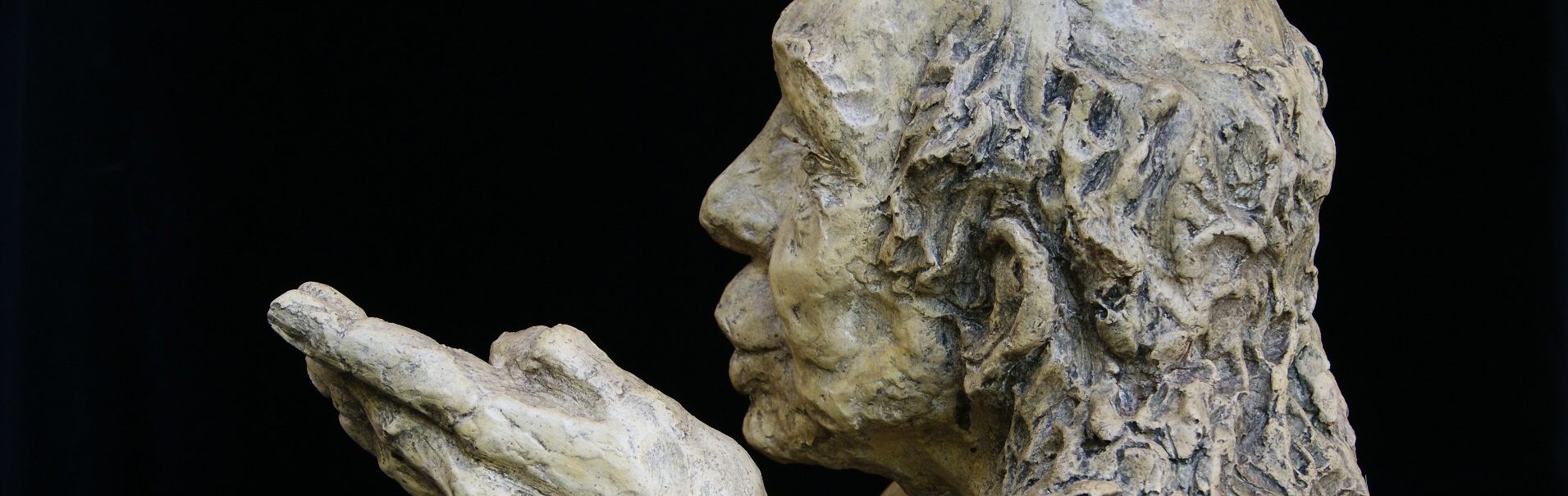
The story of Nathan the Wise

A middle aged man wears a turban and is dressed in a coat with a high collar. Jewish sidelocks (“peyes”) come from underneath the turban. On his left lapel he wears a Christian cross. Three rings adorn his fingers.
Turban (Islam), sleep locks (“peyes" - Judaism) and cross (Christianity) in this picture represent the connection between the three world religions.
The 18th century philosopher Gotthold Ephraim Lessing (1729-1781) wrote a play titled "Nathan der Weise." The story is about Nathan the Wise, orthodox jew, who is asked by a sultan: 'which of the three world religions, in your opinion, has supremacy: Islam, Judaism or Christianity? ' A dangerous question, particularly when asked by a muslim to a powerful orthodox jew; how to answer so that you bring it alive and yet do not deny yourself?
Nathan responds with a story about a magical ring in a powerful family which is passed from generation to generation, not to the oldest son per se, but to the one deemed most suitable. This ring makes the wearer universally loved. But it only works if the carrier relies absolutely on the magical power. In case of doubt the magic evaporates.
With the three world religions, says Nathan, it is the same: they 'work' for their own believers exactly because their faith is so deep. Who are we to say which is "real" when all three generate so much faith? Nathan brings it alive, Lessing has made his point about the need for tolerance.